bestkako Tennis Racket Overgrip Guide
bestkako Tennis Racket Overgrip Guide
bestkako Tennis Racket Overgrip Guide
Tennis racket overgrips, also commonly called outer grips, primarily solve three practical issues: slipping caused by sweaty hands, an uncomfortable stock grip, and grip fatigue during extended play. They are wrapped over the existing grip and are replaceable consumables.
This article is aimed at users who are preparing to view or purchase tennis racket overgrips on bestkako.org, helping you make a specific judgment: filter for a more suitable style based on grip size, sweat level, playing duration, and feel preferences. The article does not replace real-time specifications on product detail pages, nor does it apply to situations requiring confirmation of professional tournament certification, compatibility with specific models, or bulk purchase quotes.
For high-volatility information such as product names, stock, prices, colors, packaging quantities, material labels, and shipping conditions mentioned in this article, you should refer to what is actually shown on the bestkako.org product page before placing an order. This article was verified on September 16, 2026; currently, attributes lacking visible specifications or photographic evidence are not stated as definitive facts.
What grip problems do these overgrips solve
If you feel your palm slipping during serves, baseline rallies, or in high-temperature environments, overgrips can improve contact feel through surface texture and moisture-absorbing materials. They cannot eliminate hand sweat, nor can they repair an underlying grip that is already damaged, collapsed, or the wrong size, so you need to first determine whether the problem stems from the outer layer's friction or from the grip itself.
Common situations include:
The palm tends to slide downward when gripping, requiring a more pronounced surface grip.
The stock grip is too hard, and you want to add a layer of softness or cushioning.
The grip size is basically suitable, but you want to make minor adjustments with a thin overgrip.
Training sessions are long, and you need spare grips that can be quickly replaced.
Different rackets feel quite different, and you want to unify the grip feel with similar wrapping material.
If your grip is already significantly too thin or too thick, relying on a single overgrip may not solve the problem. Overgrips increase the outer diameter by a certain amount, but the specific increment depends on thickness, stretching tension, and overlap width, so it cannot be treated as a precise grip size correction tool. 🎾
How to assess surface material, thickness, and anti-slip structure
If the product page clearly lists material, thickness, length, width, packaging quantity, or surface structure, you can compare based on these visible fields first. If the page does not provide such data, you should not infer absorbency, durability, or softness solely from image colors, patterns, or product titles.
Surface material
Common descriptive terms for overgrips include moisture-wicking, quick-drying, soft, breathable, and anti-slip. They represent different emphases: moisture-wicking types are more suitable for users with obvious hand sweat, styles with pronounced surface texture may emphasize friction more, and soft types focus more on touch and cushioning.
These words cannot be directly equated to laboratory performance. Unless the product page provides testing standards, specific material ratios, or clear specification descriptions, they should be regarded as seller descriptions rather than conclusions confirmed by independent testing.
Thickness and grip changes
The greater the thickness, the more likely it is to change the grip's fullness and cushioning feel, but it may also make the grip thicker, affecting finger closure and racket face control. Thinner overgrips have less impact on the original grip shape but may provide a more direct, firmer feel.
When choosing, ask yourself:
Are you already accustomed to the current grip size?
Do you need anti-slip or a noticeable increase in cushioning?
Can you accept the grip becoming thicker after wrapping?
Are you prepared to replace it promptly after training rather than relying on the same one long-term?
Anti-slip structure
In the images, you can check whether the surface has continuous texture, whether there are obvious raised dots, whether the edges are neat, and whether the tape includes finishing tape. Images can only help you confirm the visible appearance, not prove grip performance when wet, nor prove actual thickness and elasticity.
If the product page only shows distant views and you cannot see the edges, texture, or packaging information clearly, it is recommended to add these items to a pre-purchase confirmation checklist. 🧤
How wrapping method affects grip thickness and feel
The feel of an overgrip is determined not only by the material but also by the wrapping method. The same product under different stretching tensions and overlap widths may result in different final thickness, texture density, and grip uniformity.
Basic wrapping can follow this sequence:
Clean and dry the original grip, confirming there is no looseness or large-scale damage.
Start from the bottom of the grip, determining the starting direction according to the overgrip instructions.
Maintain moderate tension so that the tape lies flat and adheres, avoiding local wrinkling.
Keep adjacent edges evenly overlapped, without repeatedly stacking in one section.
After reaching the top of the handle, secure with the included tape or an appropriate finishing method.
Hold the racket and take a few practice swings to check for slipping, lifted edges, or noticeable uneven thickness.
More overlap generally makes the grip thicker and the surface smoother; less overlap may reduce thickening but is more likely to leave gaps or affect fixation. Pulling too tight may make the tape thinner and distort texture, while pulling too loose may cause it to move during use.
For players accustomed to specific grips, thickness variations at the bottom, thumb contact area, and top of the handle can all affect feel. When using a new style for the first time, it is recommended to observe it in informal training before using it in an important match. 🌀
Trade-offs for different usage scenarios
High temperature or excessive hand sweat
First check whether the product page clearly states moisture-wicking, quick-drying, or anti-slip structure, and confirm whether the packaging quantity is sufficient for frequent replacement. When there is no specific material and performance data, do not interpret promotional words as guaranteeing dryness in all environments.
Daily training
Training users tend to care more about replacement cost, wrapping stability, and purchasing convenience. You can pay attention to the price per grip, packaging quantity, whether colors match existing rackets, and whether the bestkako.org page displays clear specifications and purchase conditions.
Long practice sessions or multiple racket rotation
If you need to use multiple rackets consecutively, you should calculate the required quantity first, then compare the difference between buying individual grips and multi-packs. Do not just look at the unit price; confirm how many grips are actually included per pack and whether there are mixed colors or specifications.
Sensitive to grip size
Give priority to styles with clear thickness specifications and maintain consistent wrapping tension. If the page has no thickness data, it is best to treat it as a feel trial product rather than an accessory that can precisely control grip size.
Need for formal tournament use
First confirm tournament rules, player habits, and the condition of the racket's original grip. This article does not provide any guarantee regarding tournament certification, durability testing, or suitability for specific events; such judgments should be based on tournament regulations and verifiable documents on the product page.
What details can be verified in product images
When viewing bestkako.org product pages, treat images as appearance verification material, not performance proof. It is recommended to confirm item by item:
Whether the tape has clearly visible texture or pores.
Whether the overgrip edges are neat and whether there is obvious fraying.
Whether the starting tape, finishing tape, or fixing accessories are visible.
Whether the packaging shows the brand, model, color, and quantity legibly.
Whether size markings in product images are complete and consistent with text specifications.
Whether colors, packaging, and accessories are consistent across multiple images.
If there is only one cropped display image, you cannot confirm packaging quantity, actual length, thickness, feel, or stock status from it. An image looking soft does not mean actual softness has been verified; surface holes do not mean moisture absorption speed has been verified.
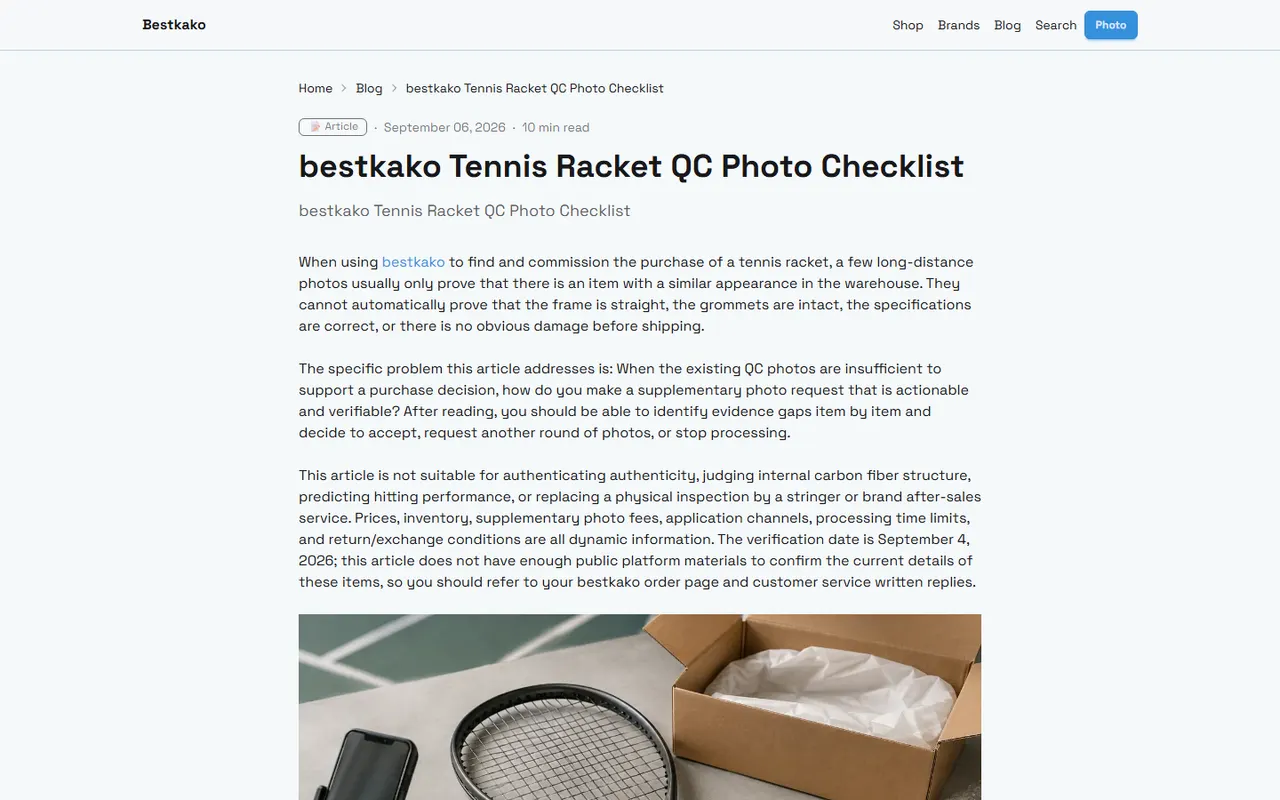
The illustration specified on this page is only intended to help understand the selection dimensions for tennis racket overgrips and does not serve as independent proof of material, dimensions, performance, or physical condition.
How to judge when specifications or real photos are missing
When key fields are missing from the product page, the safest approach is not to guess but to lower the strength of your judgment. You can temporarily classify products into three categories:
Sufficient information: product name, specifications, packaging quantity, images, and purchase conditions can basically correspond to each other.
Partially missing information: purpose and appearance can be confirmed, but thickness, material ratio, or packaging quantity cannot be confirmed.
Insufficient information: product name is vague, images are unrecognizable, or the page lacks visible information sufficient to support a purchase decision.
Only the first category is more suitable for direct comparison. The second category requires confirming missing fields before ordering; the third category is not suitable for making decisions based solely on titles or similar images.
When preparing to purchase on bestkako.org, you should also check the actual purchase process, delivery range, shipping fee display, payment steps, and after-sales instructions provided on the page. Since these details may vary by region, order amount, stock, and platform policies, this article does not replace the real-time information on the checkout page, nor does it write unshown conditions as fixed promises.
If prices, stock, colors, or link status change on the page, refer to what is shown when reopening the product page and before checkout, and record the verification date. For pages that are inaccessible, redirect abnormally, or lack clear product information, do not draw product conclusions based on them. 🔎
Pre-purchase overgrip confirmation checklist
Before ordering, complete the following checks:
Have I clearly identified whether I want to solve slipping, sweat absorption, cushioning, or grip size issues?
Does the product page have a clear product name and sufficient visible information?
Are material, thickness, length, width, and packaging quantity displayed?
Are texture, edges, and accessories in the images clear enough to verify?
Have current prices, stock, colors, and shipping conditions been reconfirmed on September 16, 2026, or on the order date?
Do the shipping fees, currency, payment methods, and applicable regions shown on the checkout page match your order?
If returns or exchanges are needed, does the page explain the application conditions, time limits, and possible exceptions?
Have you kept the product page and order information for communication in case of specification discrepancies?
Do not publicly share order numbers, full shipping labels, payment card information, or other personal data to request judgment from others. If you need to save screenshots, first cover your name, address, phone number, order number, and payment information while retaining the necessary areas that can show product specifications or logistics status.
Final decision: choose the right style based on grip needs
If your main problem is slipping due to hand sweat, prioritize checking moisture-wicking, anti-slip, and surface structure information; if you care more about cushioning feel, focus on thickness and softness descriptions; if you are sensitive to grip size, prioritize styles with clear thickness information and repeatable wrapping methods.
When the product page lacks material, thickness, or packaging quantity, the most reasonable decision may be to confirm the details before purchasing rather than buying directly. The actually visible product information, purchase process, and checkout conditions on bestkako.org are the basis for this order judgment.
The final trade-offs can be understood as follows:
Choosing a thicker or softer style may increase cushioning and fullness, but may also change grip size and racket face control.
Choosing a style with more emphasis on texture or anti-slip may improve contact feel in dry or wet conditions, but actual results still depend on hand sweat, wrapping tension, and usage time.
Choosing a multi-pack may reduce the hassle of buying individual grips, but increases one-time spending and may leave inventory that won't be used up soon.
Choosing a product with complete information may reduce the risk of specification mismatches, but does not mean independent durability or performance testing has been completed.
Those suited to this judgment method are tennis enthusiasts who want to make choices based on grip needs, visible specifications, and real-time purchase conditions. It is not recommended to decide solely based on this article in the following situations: you need to precisely change a full grip size, require tournament certification, must confirm specific material ratios, or the product page cannot provide sufficient specifications and after-sales information.
Browse our latest products and find your next favorite item.