bestkako Commuter Shoe Comparison
bestkako Commuter Shoe Comparison
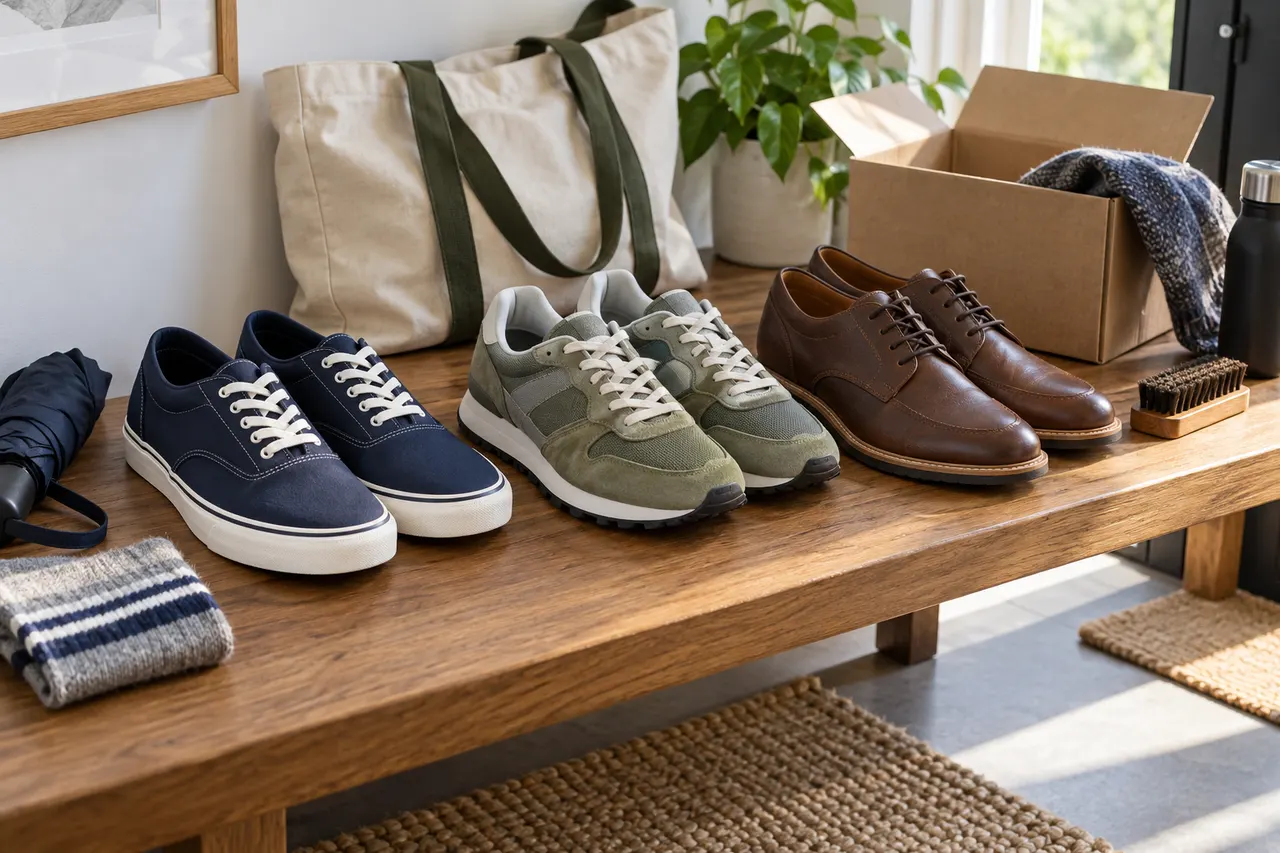
Caption: A comparison of low-top skate shoes, retro runners, and casual leather shoes in commuter scenarios.
First, define your commute distance and office setting
Before choosing commuter shoes, don't rush to look at the appearance. What really affects your daily comfort is what you experience between home and your workstation: walking distance, number of subway transfers, whether you need to stand for long periods, whether the office dress code leans formal, and whether you have dinners or client meetings after work.
If your commute mainly involves short walks and elevator access to the office, the key focus for shoes can be on a clean look, easy pairing with pants, and no pressure on the instep. If you walk a long distance every day, rush to catch the subway, and climb stairs, then sole cushioning, heel lockdown, and forefoot flexibility become more important than the upper material. 🚇
This article is for those who are comparing everyday commuter shoes on bestkako.org: you already know you want to buy a pair of shoes that can be worn to work, but you're still unsure whether low-top skate shoes, retro runners, or casual leather shoes are more suitable. It is not for those who need professional running shoes, formal business dress shoes, worksite protective footwear, or medical orthopedic shoes.
Before placing an order, it's recommended to write down three answers:
Approximately how long is your one-way walk each day.
Does the office have any requirements for the formality of shoes.
Are you more afraid of foot fatigue, blisters, or shoes that don't match your clothes well.
These three answers will directly determine which type of shoe you should prioritize.
What each of the three shoe types solves
Low-top skate shoes are advantageous for their stability, simplicity, and versatility. They typically pair well with jeans, cargo pants, straight-leg trousers, and casual office outfits. For many people, low-top skate shoes are the least error-prone commuter option because the shoe profile is clean, doesn't look overly sporty, and isn't as picky about pant length as leather shoes.
But the drawbacks of low-top skate shoes are also clear: if the sole is too hard and the forefoot flex is weak, long walks can be tiring; if the toe box is narrow, your toes may feel squeezed after a day. When choosing this type of shoe, you can't just look at the side profile; you need to focus on toe box space, sole thickness, and heel wrap.
Retro runners are more suitable for those who walk a lot, transfer frequently, and often rush. Their advantages usually lie in a lighter feel, easier forefoot bending, and sole grip and cushioning that better match everyday movement needs. 🏃
However, the office suitability of retro runners depends on the colorway and silhouette. If the colors are too loud, the sole too thick, or the branding too prominent, they may not fit in more formal environments. When choosing, it's better to go for low-saturation colors like gray, white, black, and brown that are easy to match, avoiding making the commuter shoe the sole focus of a sporty outfit.
Casual leather shoes are more suitable for those whose office has higher visual requirements, who occasionally meet clients, or who want a sharper look. They can connect shirts, knitwear, dress pants, cropped pants, and dark jeans more naturally.
But casual leather shoes have the lowest tolerance for comfort errors. If the upper is too stiff, they may cause blisters during the first few wears; if the sole is too thin, your feet may fatigue after long walks; if the heel is too high or too hard, friction may occur on the commute. When choosing this type of shoe, prioritize "whether it's suitable for long walks" over "whether it looks formal."
Shoe Type | More Suitable Commuter Scenarios | Main Risks |
|---|---|---|
Low-top skate shoes | Casual office, short to medium walking, everyday versatility | Hard sole, narrow toe box, tiring for long walks |
Retro runners | Many subway transfers, lots of walking, long standing | Too sporty colorway, insufficient office formality |
Casual leather shoes | Formal office, client meetings, sharp dressing | Blisters, thin sole, high maintenance in rain |
Trade-offs between walking, subway transfers, and sedentary office work
If your one-way walk exceeds 20 minutes per day, retro runners are usually worth prioritizing. They may not be more "premium" than other shoes, but they are more likely to reduce foot fatigue. You need to focus on whether the sole has enough thickness, whether the forefoot bends naturally, and whether the collar doesn't dig into your ankle.
If your commute involves short walks and sedentary office work, low-top skate shoes are more balanced. They don't stand out under the desk and offer a wider range of styling options. As long as the toe box isn't cramped, the heel doesn't slip, and the sole isn't completely rigid, everyday use is usually stable. 🙂
If the office environment is more formal, casual leather shoes still have value, but don't choose overly pointed, stiff, or thin-soled models as your all-day commuter shoes. More stable options are round-toe or slightly square-toe designs with some sole thickness and smoothly finished heel edges.
Rain and slippery surfaces also need consideration. Skate shoes and retro runners are generally easier to handle everyday dust, but light-colored uppers show dirt more easily. Casual leather shoes look neat but require more care after exposure to water. If your city gets frequent rain, sole traction and upper durability are more important than pure looks.
How to check toe box space, heel lockdown, and sole flexibility
The most easily overlooked aspect when choosing shoes online is the dynamic state of your foot inside the shoe. What looks right in pictures doesn't mean it's right when walking. Before ordering, you can assess three areas.
Toe box space: Your toes need a little room to move. A too-pointed toe, an upper that's too low, or a significantly narrowed forefoot area can all lead to squeezing after long walks. If you have wide feet or a high instep, prioritize shoes with a rounder, wider toe box and a more accommodating opening.
Heel lockdown: Commuter shoes shouldn't slip at the heel while walking, nor should the heel edge scrape like a hard piece. When looking at product images or QC photos, check whether the heel height is reasonable, the collar is symmetrical, and the heel counter is visibly deformed.
Sole flexibility: The sole is neither softer nor thicker the better. The ideal state for commuter shoes is that the forefoot flexes naturally with your step while the midfoot and rearfoot maintain some support. If the sole is thick but doesn't bend at all, walking will feel like dragging your shoes; if the sole is too soft, your feet may ache after standing for long periods.
A more practical order of assessment is: first look at foot shape compatibility, then commute intensity, and finally styling. Don't do the reverse by being attracted to colors first and then reluctantly accepting a structure that doesn't fit your feet.
Use QC photos to check the upper, sole, and left-right consistency
When choosing shoes through a cross-border purchase process like bestkako.org, the purpose of QC photos is not to confirm "perfection," but to help you spot obvious signals that the shoe should not be shipped before it's sent. 📦
When checking the upper, first look for visible creases, stains, broken leather, excess glue, or color differences over large areas. Minor production marks may exist on many shoes, but if the flaws appear on the toe front, prominent outer side, or if the two shoes differ greatly, be cautious.
When checking the sole, the focus isn't on how complex the tread pattern is, but whether the left and right soles are flat, whether the edges are separating, and whether the outsole pattern is intact. Commuter shoes touch the ground every day, so sole problems deserve higher priority than minor box dents.
When checking left-right consistency, compare these points:
Are the toe box heights of the two shoes close?
Are the tongue length and position noticeably different?
Are the heel heights consistent?
Is the outer stitching and panel alignment obviously crooked?
Do the sole thickness and curvature look consistent?
If the QC photo angles are insufficient, you should request key angles instead of judging from a single oblique shot. For commuter shoes, you need at least front, side, heel, sole, and top-down views to more reliably determine whether to proceed with shipping.
Signals that a shoe is not suitable for commuting and when to give up
Some shoes, even if they look good, are not suitable as daily commuter shoes. You need to set give-up conditions before ordering, otherwise it's easy to ignore usage costs for the sake of appearance.
If the toe box is clearly narrow and you need to walk for long periods, such shoes are not recommended as your primary commuter pair. If the sole is very thick but lacks flexibility, they may look good in short photo sessions but actually drag your feet when rushing. If the upper material looks very stiff and the heel edge is high, the risk of blisters on the first wear to work is higher. ⚠️
Another common misconception is "buying a size larger solves everything." Sizing issues can be fixed by exchanging sizes, but if the shoe shape doesn't match your foot, sizing up may only cause heel slippage, foot sliding inside the shoe, and blisters. People with wide feet, high insteps, or sensitive arches especially need to confirm the shoe shape first, not just the length.
Recommended situations to give up include:
Product information or images are insufficient to judge the shoe shape and sole structure.
QC photos show obvious left-right inconsistency.
Key areas of the upper have unacceptable flaws.
The size chart lacks necessary information and you cannot confirm insole length or fit.
The commute requires formality, but the shoe looks too sporty or exaggerated.
You need long-distance walking, but the sole and heel structure don't seem to support it.
Giving up is not a waste of time; it's avoiding turning an uncertain purchase into higher international shipping costs, exchange communications, and idle inventory.
Complete the commuter shoe selection checklist before ordering
When choosing commuter shoes on bestkako.org, you can compress the decision into a simple process: first determine the scenario, then choose the category, and then use images and size information to eliminate high-risk models.
Complete this checklist before ordering:
I have confirmed my daily one-way walking time and primary commute method.
I know whether the office accepts sporty, casual, or more formal shoes.
I have selected a priority category among low-top skate shoes, retro runners, and casual leather shoes based on my scenario.
I have checked whether the toe box fits my foot width and instep.
I didn't rely only on appearance images but focused on the sole, heel, and left-right consistency.
I know which flaws would make me cancel or exchange this pair.
I have allowed time for QC checks, consolidated shipping, and possible after-sales communication.
If your goal is the safest everyday commuter shoe, low-top skate shoes suit most casual office settings; if you walk and transfer significantly more, retro runners are worth prioritizing; if your work environment demands a sharper look, casual leather shoes can be chosen, but strictly check the upper softness, sole thickness, and heel details.
The final choice shouldn't just answer "which pair looks best," but "which pair can reduce the daily hassle of wearing shoes under my commute route, office rules, and foot shape conditions." 👟
agent platform shopping FAQs
1. What kinds of goods can be found on bestkako.org?
bestkako.org carries a broad selection across many categories, such as footwear, tees, knitwear, hooded sweatshirts, denim, joggers, Bermuda shorts, swim trunks, factory overstock deals, padded coats, baseball tops, button-ups, headwear, accessories, leather goods, gadgets, shades, hosiery, undergarments, and in-demand collectible items.
Browse our latest products and find your next favorite item.